A Look at the Impact of 5G on Connectivity and Economic Growth
August 24, 2022 / 5min read
The fifth-generation wireless technology, or 5G, is the latest evolution of cellular networks, providing faster data transfer speeds, lower latency, and greater capacity than its predecessors. While 5G is being rolled out globally, Africa has been slow to adopt this technology due to several challenges, including limited infrastructure and affordability. However, as the continent seeks to harness the benefits of a digital economy, there is growing interest in 5G technology in Africa, particularly in East Africa. In this blog post, we will explore the potential of 5G technology in Africa and its impact on the region's digital future.
What is 5G technology?
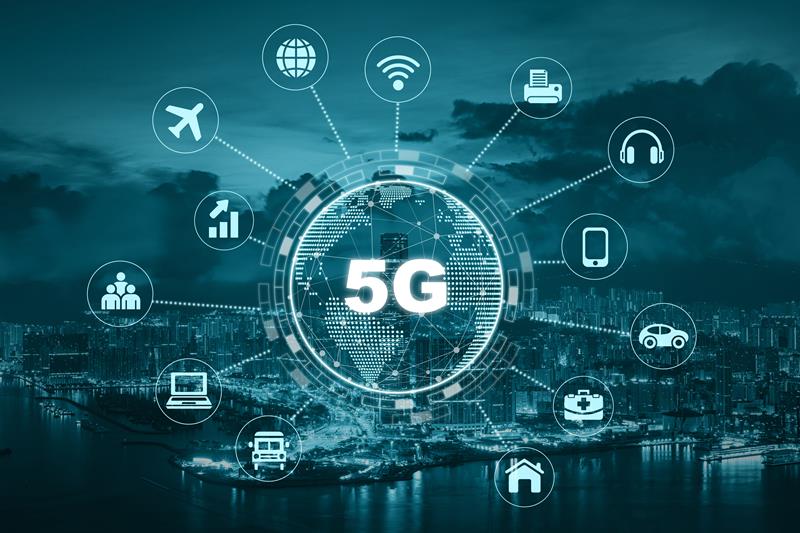
5G technology is the fifth generation of mobile network technology, offering faster download and upload speeds, reduced latency, and greater capacity than 4G technology. This technology operates on higher frequency bands, allowing for more data to be transmitted at faster speeds. With the advent of 5G, several applications such as virtual and augmented reality, smart homes, self-driving cars, and remote surgery can be realized.
Challenges to 5G adoption in Africa
While 5G technology is being adopted globally, the same cannot be said for Africa. Several challenges, including limited infrastructure and affordability, are impeding the adoption of this technology in Africa. According to the GSMA, only 12% of the African population has access to 4G technology, and the high cost of spectrum licenses is a significant barrier to 5G deployment in the continent. In addition, Africa's limited energy and transportation infrastructure also hamper the deployment of 5G technology.
💡 Inspiration
One inspiring example of the potential of 5G technology in Africa is the "5G for Good" initiative by Ericsson, a leading telecommunications provider. This initiative aims to leverage 5G technology to address social and economic challenges in Africa, such as poverty, inequality, and climate change.
Through this initiative, Ericsson is partnering with several stakeholders, including governments, NGOs, and private sector players, to develop 5G-based solutions for these challenges. For example, Ericsson is working with the WFP (World Food Programme) to develop a 5G-based solution for tracking and monitoring food aid distribution in Uganda.
Potential of 5G technology in Africa
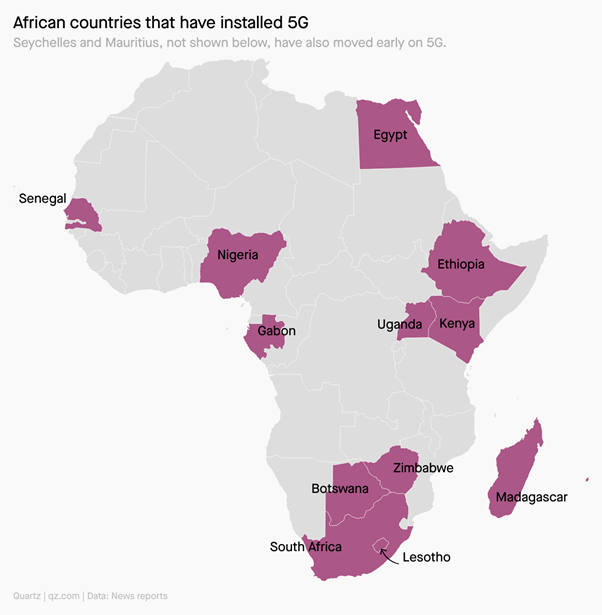
Despite the challenges facing 5G adoption in Africa, there is growing interest in the technology, particularly in East Africa. Several African countries, including South Africa, Nigeria, and Kenya, have initiated 5G trials and pilots, and some telecommunications providers have already started offering 5G services.
5G technology has the potential to transform several sectors in Africa, including agriculture, healthcare, education, and finance.
For example, in agriculture, 5G technology can be used to monitor crops and livestock, providing farmers with real-time data on weather, soil conditions, and crop growth, which can lead to increased productivity and better yields. In healthcare, 5G technology can improve the delivery of medical services, including remote diagnosis and treatment, as well as the monitoring of patient vital signs. Additionally, 5G technology can enable the delivery of quality education to remote areas, and in finance, it can facilitate faster and more secure transactions.
Summary
In summary, 5G technology has the potential to revolutionize several sectors in Africa, including agriculture, healthcare, education, and finance. However, several challenges, including limited infrastructure and affordability, are impeding the adoption of this technology in Africa. Despite these challenges, there is growing interest in 5G technology in East Africa, and several countries have initiated 5G trials and pilots. Through initiatives like "5G for Good," there is hope.

END...